• Word Café
  • Writers/Teachers
    • Nina Shengold “Opening Lines” 9/17/16
    • Jana Martin, “The Last Line” 10/8/16
    • Abigail Thomas & Pauline Uchmanowicz 9/25/16
    • Amitava Kumar & Sunil Yapa 10/23/16
    • Nina Shengold & Jana Martin 12/4/16
  • Schedule + Registration
  • Event Archive
  • Contact

Word Café

a master class for readers and writers

JOSEPH LUZZI, “Writing With All Five Senses”

November 20, 2014 By Word Cafe

JOSEPH LUZZI is a writer and professor of Italian at Bard College. The first child in his Calabrian family born in the U.S., he is the author of the memoir My Two Italies (Farrar, Straus and Giroux, July 2014. He is a frequent contributor of essays and reviews to publications including the New York Times, Los Angeles Times, Bookforum, the London Times Literary Supplement, and many others. His first book, Romantic Europe and the Ghost of Italy (Yale Univ. Press 2008), received the Scaglione Prize for Italian Studies from the Modern Language Association, and he is the author of A Cinema of Poetry: Aesthetics of the Italian Art Film (Johns Hopkins Univ. Press, 2014). His work has been translated into Italian and Portuguese, and he has lectured throughout the world on art, film, literature, and Italian culture.

Read Nina Shengold’s Chronogram profile.

“Writing With All Five Senses” – The Exercises

joseph-luzzi
Joseph Luzzi

Joseph Luzzi

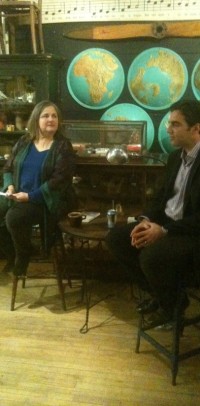
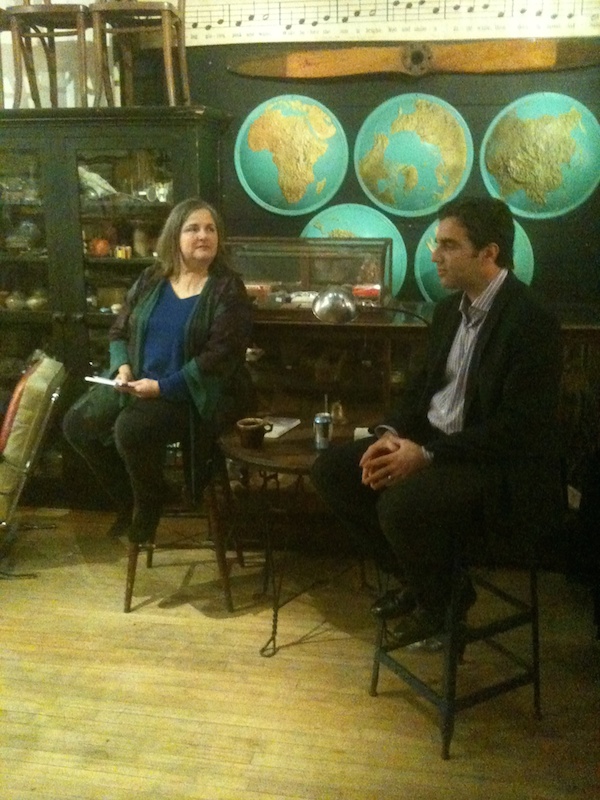
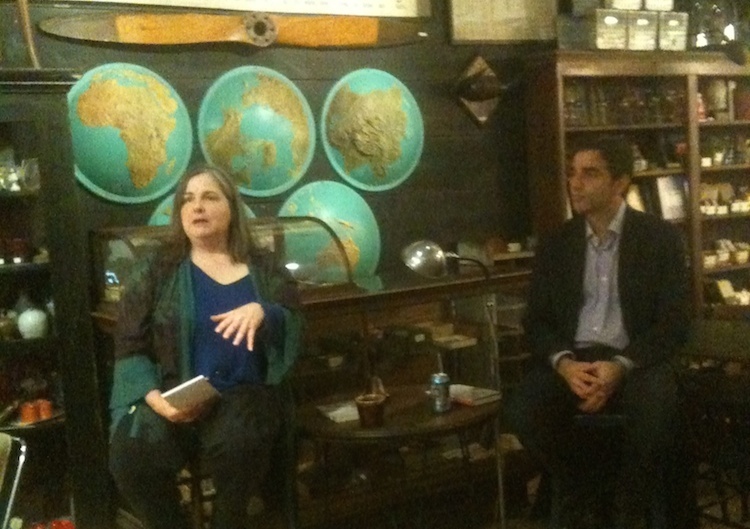
nina and joseph luzzi 2
Nina and Joseph Luzzi

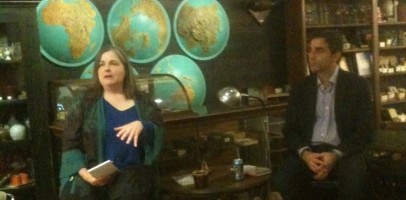
Nina Shengold and Joseph Luzzi
nina and joseph luzzi
Nina and Joseph

Nina Shengold and Joseph Luzzi


Hard to believe we’ve reached the end of our Fall 2014 Word Café series! But Joseph Luzzi finished our 12-course literary banquet with style, reading from his new memoir My Two Italies, and discussing his transition from scholarly writing (Romantic Europe and the Ghost of Italy and A Cinema of Poetry: Aesthetics of the Italian Art Film) to more personal writing. The key was our discussion topic: “Writing With All Five Senses.”

Joe described coming home after school in the afternoon, hoping for the aroma of his mother’s homemade bread, and being greeted instead by the noxious fumes of boiling tripe. It was the unbidden memory of that smell, he says, that started his writing on a new path. (“Proust got madeleines, I got boiled cow stomach,” he quipped.)

The sense of smell conveys the strongest memories, he says. But sounds, tastes, and textures–“things you can get your hands dirty with”–are equally evocative, and ground your writing in sensual details that connect the reader. Sight is less physical and more familiar–it’s the “go-to” sense for description. Nina commented that it’s often useful to think about which sense is dominant in a fictional character and explore that imagery.

Joe also spoke about the need for spontaneity in writing: “If you turn the screw too many times, you wipe out the threads. Trying too hard can mean losing the joy and flow.” He reminded us that everyone has a natural idiom, something we know well and can talk about fluidly, in our natural voice. “Tell that story,” he said. “Write the book you really need to write.”

JOE’S EXERCISE

Think about something you’ve already written and reconceive it, letting the senses activate the ideas. Bring what was in your mind into the body, the physical details of the experience.

NINA’S EXERCISE

Write about a specific family meal or dish, using all five senses to describe its preparation and consumption. Happy Thanksgiving!
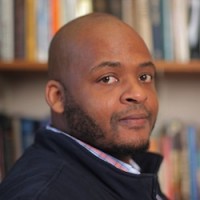
KIESE LAYMON, “Letters Home”

November 13, 2014 By Word Cafe

KIESE LAYMON is a black southern writer, born and raised in Jackson, Mississippi. Laymon attended Millsaps College and Jackson State University before graduating from Oberlin College. He earned an MFA from Indiana University and is the author of the novel Long Division and a collection of essays, How to Slowly Kill Yourself and Others in America. Laymon is a contributing editor at gawker.com. Long Division was named one of the Best of 2013 by Buzzfeed, The Believer, Salon, Guernica, Mosaic Magazine, Chicago Tribune and the Crunk Feminist Collective. Laymon has written essays and stories for Esquire, ESPN.com, Colorlines, NPR, Gawker, Truthout.org, Longman’s Hip Hop Reader, The Best American Non-required Reading, Guernica, Mythium, Politics and Culture, and others. Laymon is currently at work on a new novel “…” and a funky memoir called 309. He is an Associate Professor of English at Vassar College.

Read Nina Shengold’s Chronogram profile.

Letters Home 11/13/14 – The Exercises

Word Cafe Echo brothers
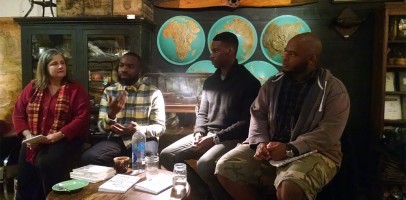
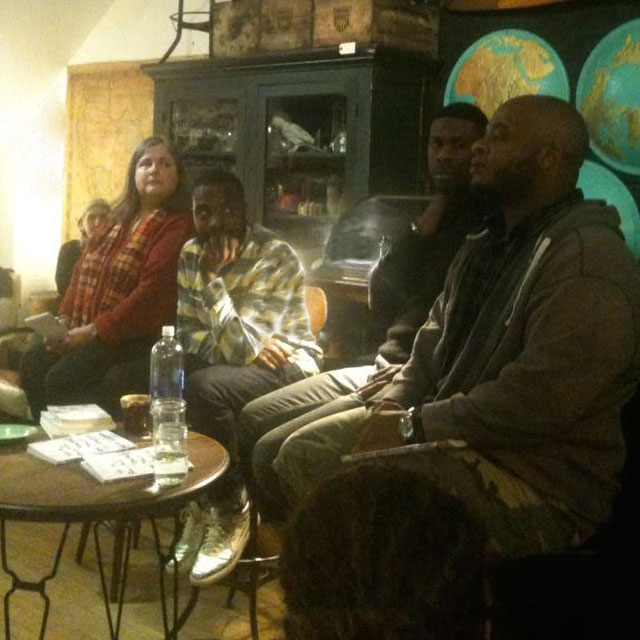
Nina, Darnell, Marlon & Kiese
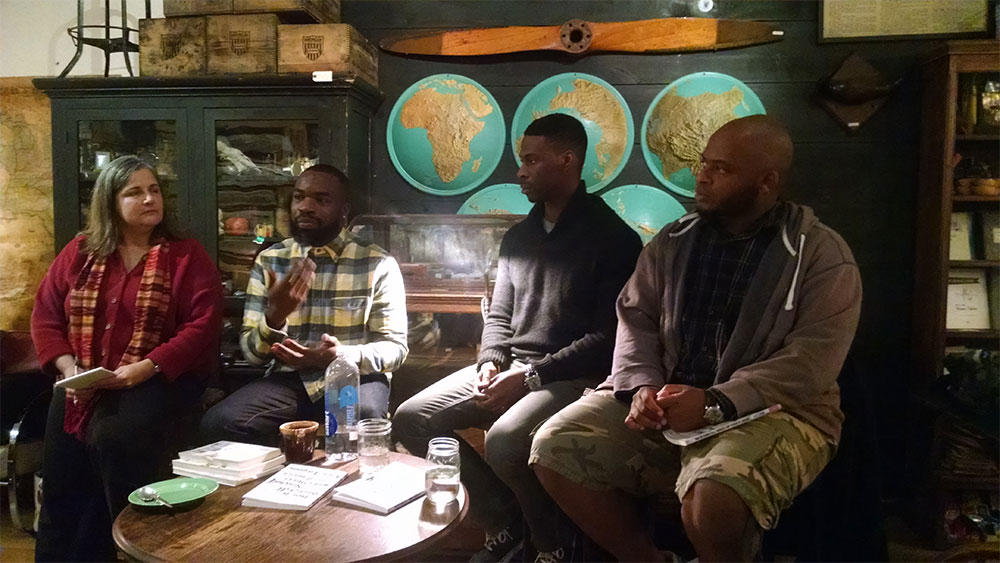
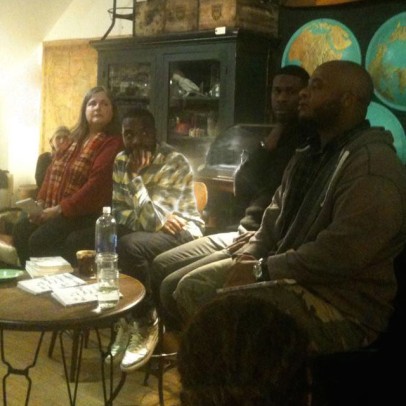
Nina Shengold, Darnell Moore, Marlon Peterson & Kiese Laymon
Kiese Laymon
Kiese Laymon
Darnell Moore
Darnell Moore
Darnell Moore
Marlon Peterson
Marlon Peterson
Marlon Peterson
kiese_nina_echo
Nina, Echo Brothers and Kiese
Nina, Darnell, Marlon and Kiese


Dear Word Café family,

Hard to sum up this powerful evening in words. There was a lot of listening and love in the room as Kiese Laymon, Darnell L. Moore, and Marlon Peterson read their contributions to the essay-in-letters “Echo,” which also includes letters by Mychal Denzel Smith and Kai M. Green. (The full text is in Kiese’s amazing How To Slowly Kill Yourself and Others in America, which you can order from The Golden Notebook.

Our subject was “Letters Home.” We talked about how letters foster direct address and one-on-one intimacy; Darnell called epistolary forms “invitational,” and I observed that letters begin and end with words of love and respect (Dear, Love, Bless, Yours truly). While Marlon was incarcerated, he started writing letters to a teacher friend’s middle-school class–he says it meant as much to him as it did to the students, who often wrote about things they’d never felt able to tell their families or anyone else.

We talked about the courage it takes to go deep and tell personal truths. Darnell still gets fierce anxiety when he reveals himself in print, but feels it’s important to connect with others who struggle with issues of mental health, suicide ideation, physical abuse, sexism, racism, homophobia, transphobia. He spoke about building a bridge that invites readers into the conversation, and how a piece that feels vulnerable often gets responses of “Thank you for writing that.” (Here’s an example, just published in Ebony).

Kiese spoke about feeling a responsibility to others whose lives are revealed when he tells his own truth. In the title essay of How To Slowly Kill Yourself and Others in America, he describes his mother (a college dean) pulling a gun on him when he was 19. When he showed it to her before publication, she said he couldn’t print that, and even that she didn’t remember it happening. Kiese felt strongly that it needed to be part of the essay, and proceeded “as generously as possible.” They exchanged long letters about what should and should not be revealed, things they’d never been able to talk about in person. “It opened a dialogue. Maybe printing that wasn’t good for my mother, but it was good for our relationship.”

When writing fiction, Kiese sometimes writes letters from one character to another as part of his process, just to get inside their head and get the sound of their voice right.

Marlon talked about the value of writing by hand, and the intimacy of looking at someone else’s handwritten words. He said he often “walks with an idea in his head” for a long time, then sits down at 2am to write it all at once; his letter in “Echo” happened like that.

Kiese said the word “echo” explores the way truths reverberate: “If you really open up, what do others write back?” Darnell talked about creating a “safe, risk-taking space” and “writing to create community.” All three men have collaborated with others on writing projects under the collective name Brothers Writing To Live (from the Facebook page: “We are a group of black cis and trans-men who hail from spaces across the United States. And we write so that we and our people might live.”) He also spoke about men’s involvement in feminism, and the reverberations among disenfranchised communities: “What would it be like if we all stood up and said, ‘This is not right?'”

We talked so long, and fielded so many great questions from participants, that we skipped the usual break and barely had time to start on a writing exercise. But here’s what it was:

— Pick someone in this room you’ve never met and introduce yourself. Sit down and start writing letters to each other. Write about what brought you here tonight, and something about yourself.

If you weren’t in the room, or didn’t get the name and address of the person you’re writing to, write a letter to someone else. And send it. Tell your truth. Connect.

Love, Nina

Share this...
Share on facebook
Facebook
Share on pinterest
Pinterest
Share on twitter
Twitter
Share on linkedin
Linkedin

CAROL GOODMAN, “Once Upon a Time”

October 30, 2014 By Word Cafe

CAROL GOODMAN‘s fiction includes her bestselling and critically acclaimed debut novel The Lake of Dead Languages, The Seduction of Water, The Drowning Tree, The Ghost Orchid, The Sonnet Lover, Arcadia Falls, the young adult novel Blythewood, and a fantasy trilogy written under the name Juliet Dark. Goodman’s books have been nominated for the IMPAC award twice, the Simon & Schuster/Mary Higgins Clark award, and the Nero Wolfe Award; The Seduction of Water won the Hammett Prize in 2003. She lives in Dutchess County, and teaches creative writing and literature at SUNY New Paltz.

Read Nina Shengold’s Chronogram profile.

“Once Upon a Time” 10/30/14 – The Exercises

Carol and NIna
Carol Goodman
with Nina Shengold

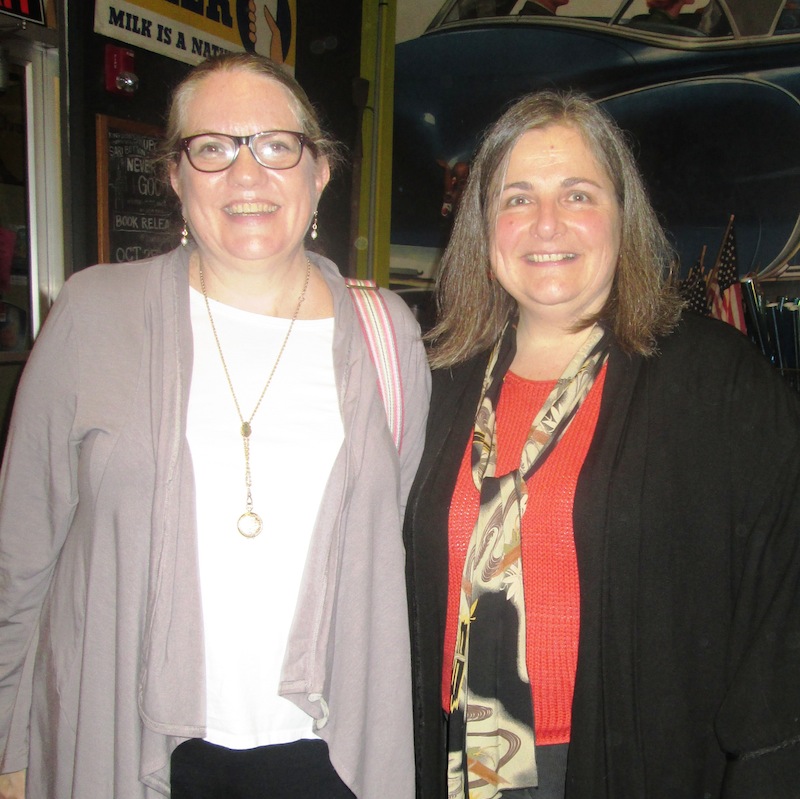
Carol Goodman and Nina Shengold

The_Selkie_by_yaamas
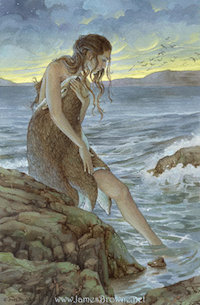
The Selkie by Yaamas

The Selkie by Yaamas

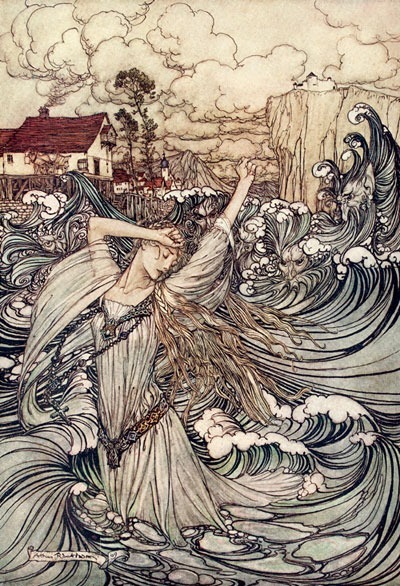
Selkie by Arthur Rackham

Selkie by Arthur Rackham

Carol Goodman signing
Carol Goodman signing for a reader

Carol signing for a reader

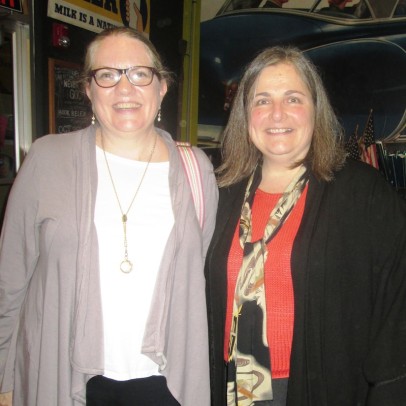
Carol Goodman and Nina Shengold

Carol Goodman and Nina Shengold


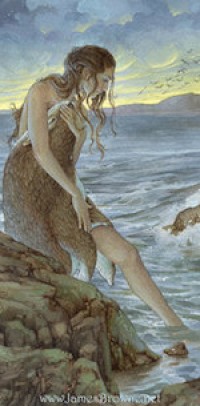
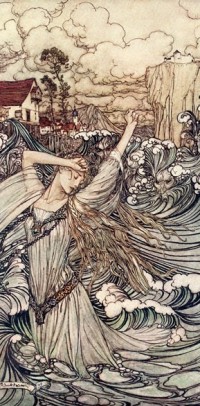
Carol Goodman enchanted us with a reading from her Hammett Prize winning mystery The Seduction of Water, in which a woman recalls her mother telling her a bedtime story about a selkie, a seal-woman captured by a farmer who steals her skin.

Our topic was “Once Upon a Time,” and we talked about the timeless allure of fairy tales, which Carol uses often in her novels and in her classroom at SUNY New Paltz. “They are our first stories,” she explained, going on to discuss the hero’s-journey structure and character archetypes in these classic tales. They’re laden with meaning and metaphor, and when one of her students has trouble coming up with a story idea, she often suggests retelling a fairy tale from a different point of view.

Carol also advises writing students “to go straight for the conflict;” Nina used to give teenage playwrights the cooking-show advice, “Bam! Kick it up a notch!”

Fairytales can provide a useful metaphor and prototype for a character’s journey, even if the book is not set in a magical realm (we talked about Jane Eyre as a character who goes through her own dark wood). Carol observed that an essential question for any character is “Why are you telling me this now?”

She writes longhand in notebooks, spending one day each week typing the previous week’s work. Since she writes in sequence, Carol sometimes finds that she needs to insert exposition in later drafts to set up choices she made as the story evolved. She cited a movie term for this–“ret-con” (for “retroactive continuity)–and suggested introducing the exposition into the story twice: once in passing near the opening, and again about 60 pages later, so that when it reappears in mid-book it will seem familiar and organic to the story. Nina pointed out that classic comedy also observes a “rule of three.”

CAROL’S EXERCISE:

(Also from The Seduction of Water; the narrator is a writing teacher!)

“Write about your favorite fairy tale from your childhood. Retell the story, but also say who told you the story and what you thought about it then. What did you learn from the story? What did it tell you about the world you lived in?”

 NINA’S EXERCISE:

Choose something in this room that could be a magical object, transforming you or your character in some unexpected way or transporting you into another world.


« Previous Page
Next Page »

Upcoming Events

There are no upcoming events.

View Calendar
Add
  • Add to Timely Calendar
  • Add to Google
  • Add to Outlook
  • Add to Apple Calendar
  • Add to other calendar
  • Export to XML

EVENT ARCHIVES

see-whos-been-here-so-far-word-cafe

See who’s been here so far

applause-word-cafe

Word Cafe Salon 12/3/15

nina-shengold-jenny-milchman-jeffrey-davis

Jenny Milchman + Jeffrey Davis “Inspiration”

sponsored by

The Golden Notebook Bookstore _Chronogram Logo

© 2021 Word Café + Nina Shengold · Site by Nan Tepper Design